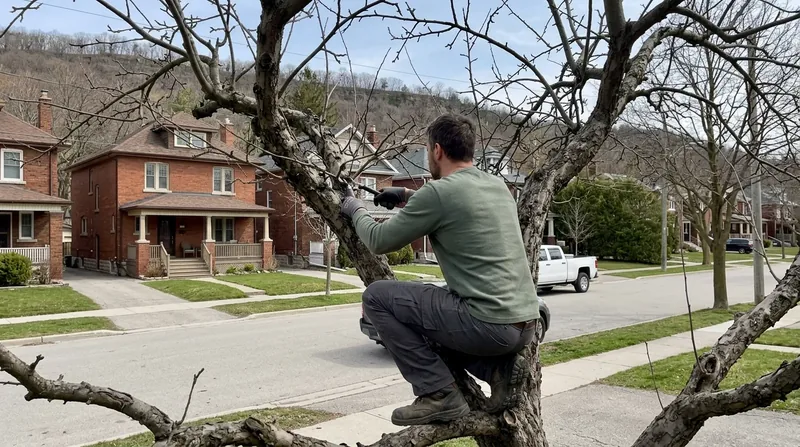




Fruit tree pruning in Hamilton restores productivity to neglected apple, pear, and plum trees across residential gardens and small orchards throughout the region. Many homeowners inherit mature fruit trees that have gone unpruned for years, developing dense canopies that choke out light and reduce yields. Our ISA Certified Arborists open the centre of these trees, remove water sprouts and crossing branches, and bring old specimens back into reliable production. We've worked on properties from Westdale to Kirkendall, where ravine lots and established neighbourhoods host some of Hamilton's most valuable fruit trees. Pruning during dormancy (late fall to late winter) ensures clean cuts and strong spring growth. Learn more about our pruning services, or call (289) 796-3100 for a free site assessment.
Why fruit tree pruning matters in the Hamilton area
Unpruned fruit trees struggle with disease, poor air circulation, and weak branch structure. In Hamilton's humid summers and variable winters, dense canopies trap moisture and create ideal conditions for fungal infections and pest damage. Opening the crown allows light to penetrate, improves fruit quality, and reduces the risk of branch failure under snow or ice load. Older trees that have been neglected for a decade or more often respond dramatically to structured pruning, returning to productive harvests within one or two seasons.
- Remove crossing and rubbing branches that damage bark and invite disease.
- Eliminate water sprouts and vigorous upright growth that shade lower limbs.
- Thin the canopy to increase light penetration and air flow throughout the tree.
- Reduce branch angles and restore strong structural crotches for long-term stability.
- Cut out dead, diseased, or pest-infested wood before it spreads.
The result is a healthier tree that bears more fruit, resists pests and disease, and poses less risk to structures and people nearby.
Key fact: A mature apple tree in Ainslie Wood that has not been pruned in 15 years typically requires 4 to 6 hours of work to open the centre, remove dead wood, and restore structure. The difference in fruit yield and tree health is visible within the first full growing season.
How we prune fruit trees
Our approach combines traditional orchard management with modern arboricultural standards. We start by assessing the tree's age, species, overall health, and your harvest goals. For apple and pear trees, we open the centre by removing 20 to 40 per cent of the canopy volume, depending on density. Plum trees receive lighter thinning to avoid excessive vigour. We make all cuts at the branch collar, using sharp hand saws and loppers to ensure clean wounds that heal quickly. Contact us for a free consultation on your specific trees.
- Inspect the entire canopy and identify dead, diseased, crossing, and low-hanging branches.
- Establish a clear central leader and primary scaffold branches for balanced structure.
- Remove water sprouts and vigorous vertical shoots that compete for resources.
- Thin lateral growth to allow 60 to 70 per cent light penetration to the interior.
- Make final heading cuts on branches that are too long or poorly angled.
- Chip or haul away all pruning debris, leaving the site clean.
We prune during dormancy (late fall through late winter) when the tree's energy is stored in the roots and the risk of disease transmission is lowest.
Real example: A 30-year-old pear tree in Milton with a 6-metre spread and dense interior canopy took our team 5 hours to open fully, remove 15 dead branches, and eliminate 40 water sprouts. The owner harvested 80 per cent more fruit the following year and reported noticeably fewer pest issues.
Pruning methods and tools
| Method | Description | Contexte |
|---|---|---|
| Centre opening | Selective removal of interior branches to increase light and air flow. | Standard for mature apple, pear, and plum trees; prevents fungal disease in Hamilton's humid climate. |
| Water sprout removal | Cutting vigorous upright shoots that emerge from the trunk and main branches. | Essential for neglected trees; prevents canopy regrowth and improves fruiting. |
| Dead wood removal | Cutting out branches killed by frost, disease, or pest damage. | Critical in in Hamilton and the surrounding area winters; prevents entry points for insects and pathogens. |
| Structural pruning | Establishing strong branch angles and removing crossing or rubbing limbs. | Protects against ice and snow load; extends tree life by 10 to 20 years. |
We use hand saws, loppers, and pole saws for all work, never chainsaws on fruit trees. Every cut is made at the branch collar to promote rapid healing and minimize disease risk.
Permitting and site conditions in Hamilton
Fruit tree pruning on private property rarely requires municipal approval, as it falls under routine maintenance. However, if your tree sits within a heritage property designation or a protected natural area, the City of Hamilton may have specific guidelines. We confirm local requirements before starting work and can provide documentation if needed. On ravine properties common throughout the Hamilton area, we ensure safe access by using ropes and climbing equipment, respecting steep slopes and protecting adjacent vegetation. All debris is chipped on site or removed in our trucks, leaving your yard clean and ready to enjoy the improved tree.
See all areas we serve across Hamilton, Burlington, Oakville, Milton, Grimsby, West Lincoln, and Pelham. For properties with questions about local rules or site constraints, our arborist reports document the work and provide written justification if needed.
When to prune your fruit trees
Dormancy pruning (late fall to late winter) is the ideal window for fruit tree work in in Hamilton and the surrounding area. Cuts heal faster, disease pressure is minimal, and the tree's structure is fully visible without foliage. Avoid pruning in spring when sap is running or in summer when stress from heat and drought is high. Late winter (February to early March) is often best, as trees are preparing to break dormancy but winter damage is fully visible. Never prune during the growing season unless removing dead or dangerous branches.
Contact Escarpment Tree Trimming at (289) 796-3100 to book your fruit tree pruning. We offer free site assessments year-round and can schedule dormancy work well in advance. Our ISA Certified Arborists will evaluate your trees, explain what needs to be done, and provide a detailed quote before any work begins.
Prices Fruit Tree Pruning in Hamilton — Indicative pricing
| Service | Price | Details |
|---|---|---|
| Small fruit tree pruning (up to 5 metres) | From $165 | Opening centre, removing water sprouts, basic structural work on apple, pear, or plum trees. |
| Medium fruit tree pruning (5 to 8 metres) | From $295 | Comprehensive thinning, dead wood removal, and canopy restoration on mature specimens. |
| Large or heavily neglected tree | From $450 | Multi-year neglect, dense canopy, or complex structure requiring 5+ hours of work. |
| Multiple trees (3 or more) | On quote | Discounted rate applied; free site assessment to determine the total scope. |
| Travel and equipment | Included | No hidden charges in Hamilton and the surrounding area. |
| Free estimate | Free | Call (289) 796-3100 for same-day or next-day appointments. |
Indicative prices; free, personalized estimate within 24h at (289) 796-3100.